|
|
|
|
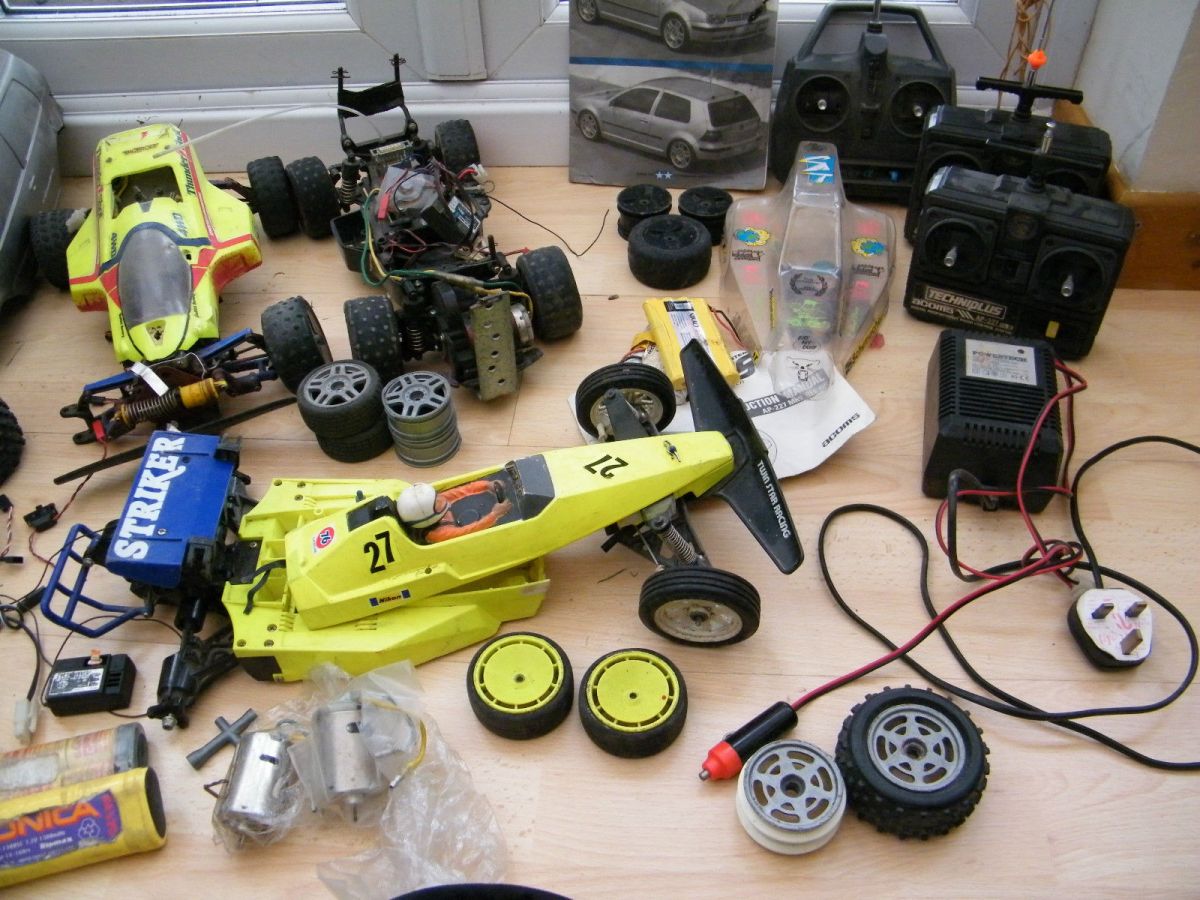
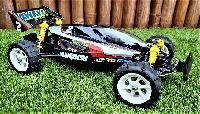
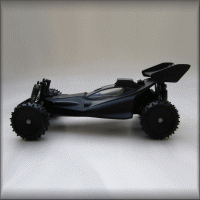
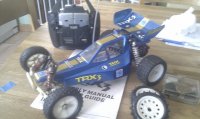
Remember this pile of junk?
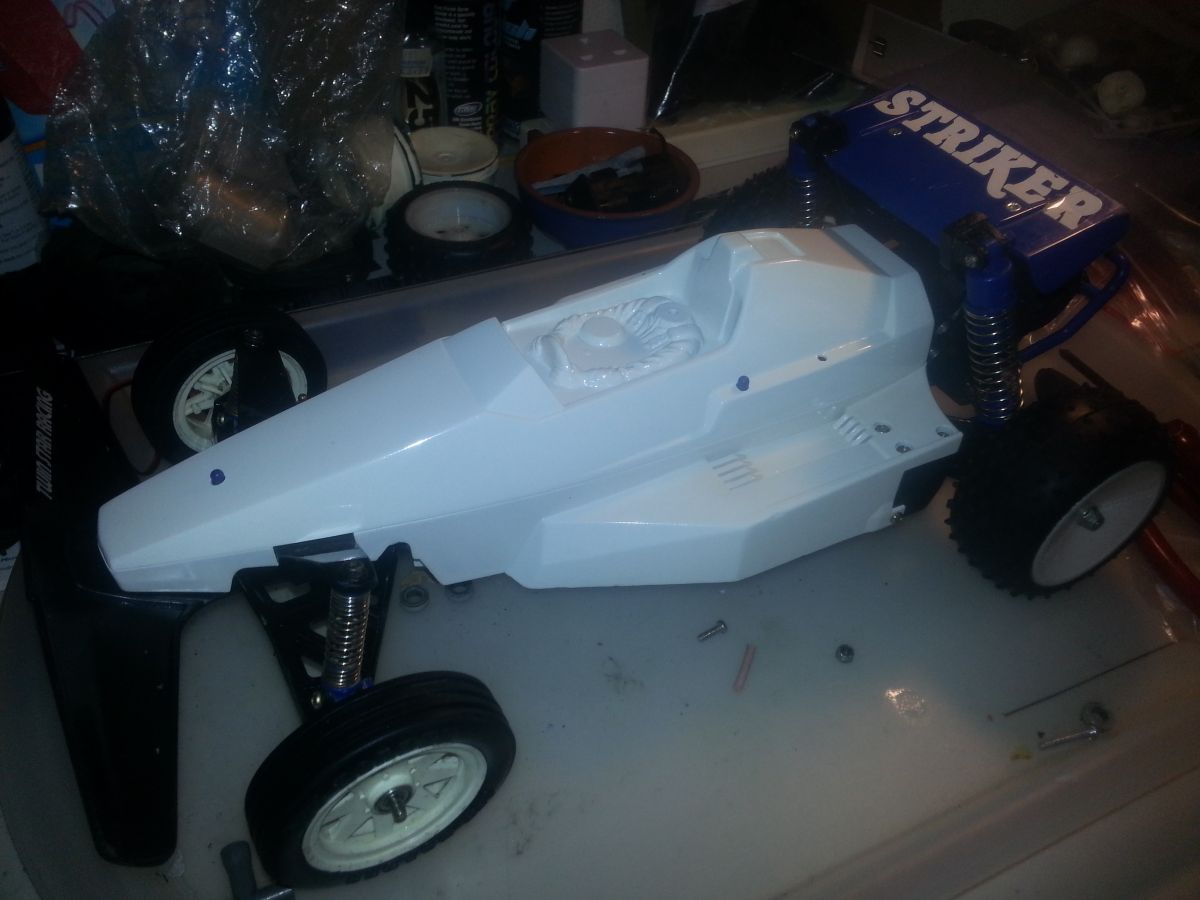
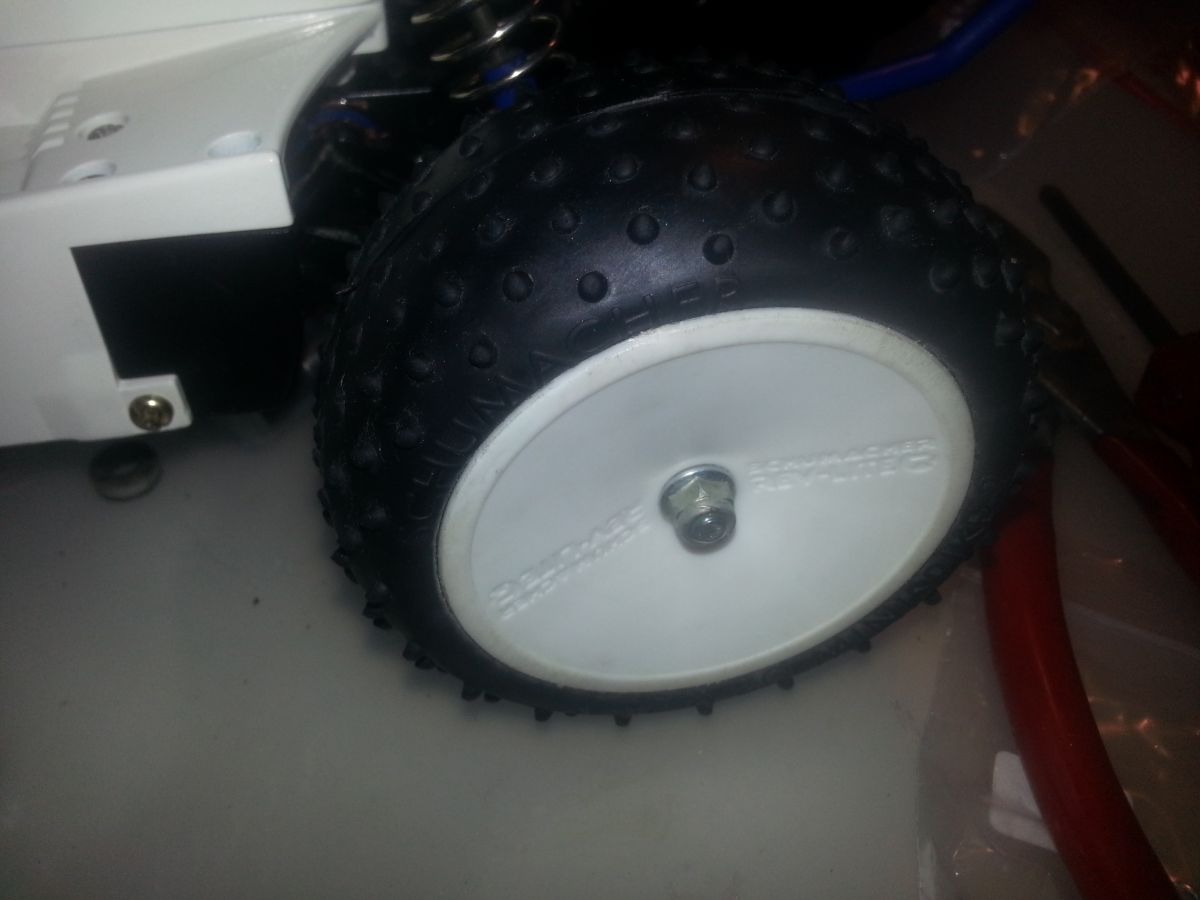
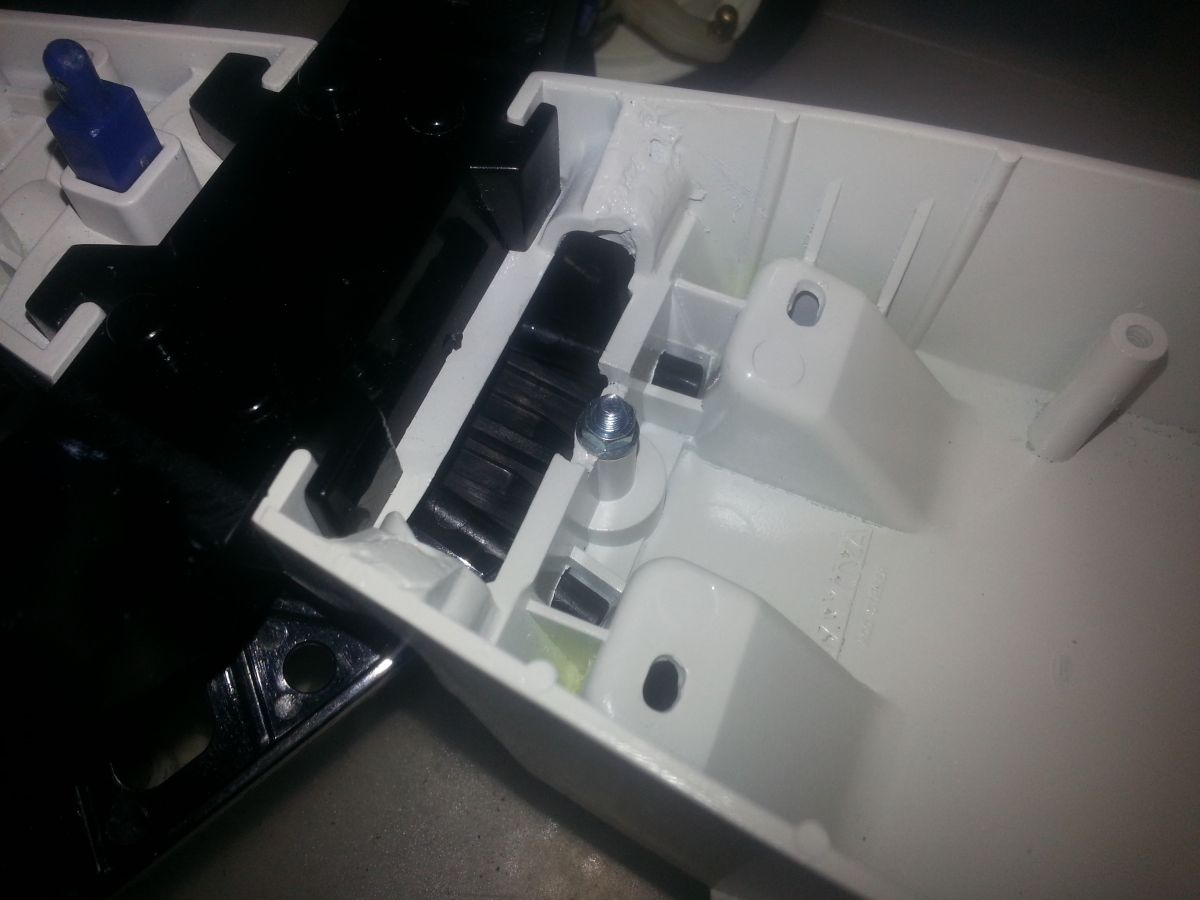
Well most of the parts seemed to be there, so I thought I would tidy it up with a view to getting a few quid back on ebay. A dunk in the sink, some graffiti remover and a coat of paint later and it looks not too bad. The rear tyres were shot, so I threw them away, not realising they are a weird size (1.9 inch maybe??). I found some Schumacher pin-drive wheels and tyres in my box that actually fit perfectly without the Striker wheel adapters. The broken chassis was repaired with Superglue and baking soda (yes, really) and the stripped bumper screw modified to take a nut and bolt. Seems strong enough.
The following user(s) Liked this: Edou
|
|
Please Log in to join the conversation. |
|
So I had a look at this Baking soda and superglue mix you speak of and I like it Questions though, how well does it bond to the Tamiya plastic and is it brittle at all or has it got some flexibility? Nice clean up by they way
If you can't fix it with a hammer, you've got an electrical problem mate
|
|
|
Please Log in to join the conversation. |
|
The baking soda is used as a kind of filler and catalyst to the CA glue. The bicarb reacts exothermically with the CA (it gets very hot).
I put the CA on first then sprinkled the baking soda on top, building it up a bit at a time. It sticks well (as well as Super glue) and seems very strong. I guess it might be brittle - I haven't tested it to destruction yet. However I did use some to build up the area around the bumper hole and it stood up to being drilled without chipping. I used the gel type CA as it was all I had, but I think the thin, liquid stuff would work better. An important point to note: Use baking soda (Wikipedia - Sodium bicarbonate or sodium hydrogen carbonate is the chemical compound with the formula NaHCO3.), not baking powder - they are different. Baking powder does contain bicarb, but also has other stuff in there too and I don't know what effect it would have.
The following user(s) Liked this: AndyAus
|
|
Please Log in to join the conversation. |
|
Seen it done once or twice before and think it's very interesting.
Kinda wondering what reaction takes place exactly, this is what a certified chemist had to say :
|
|
|
Please Log in to join the conversation.
Last edit: by Edou.
|
|
From what I remember... it's not really a catalyst then but simply providing more 'fuel' for hardening.
Other than that, I'd think digging into that again will very much complicate things : www.chm.bris.ac...rgluev.htm Even though I'm curious what the fumes consist of. |
|
|
Please Log in to join the conversation. |
|
|
|
Please Log in to join the conversation. |
|
speakin bout gluing with ca. i wanna share lil tips hope will helps.
i use filters in my cigarette , tear it made it thin, place it where u want it to glue,then drop ur CA glue there. voila ur filters act like a tough bones. |
|
|
Please Log in to join the conversation. |
Hmm never tried that out....maybe it's because i don't smoke ! Proud owner of the Bruiser Family
|
|
|
Please Log in to join the conversation. |
|
Yeahhh a good utility of the cigarette |
|
Please Log in to join the conversation. |
|
I tested today the ca+ bicarbonate (backing) method. It is amazing thanks a lot
|
|
Please Log in to join the conversation. |
|
|
|